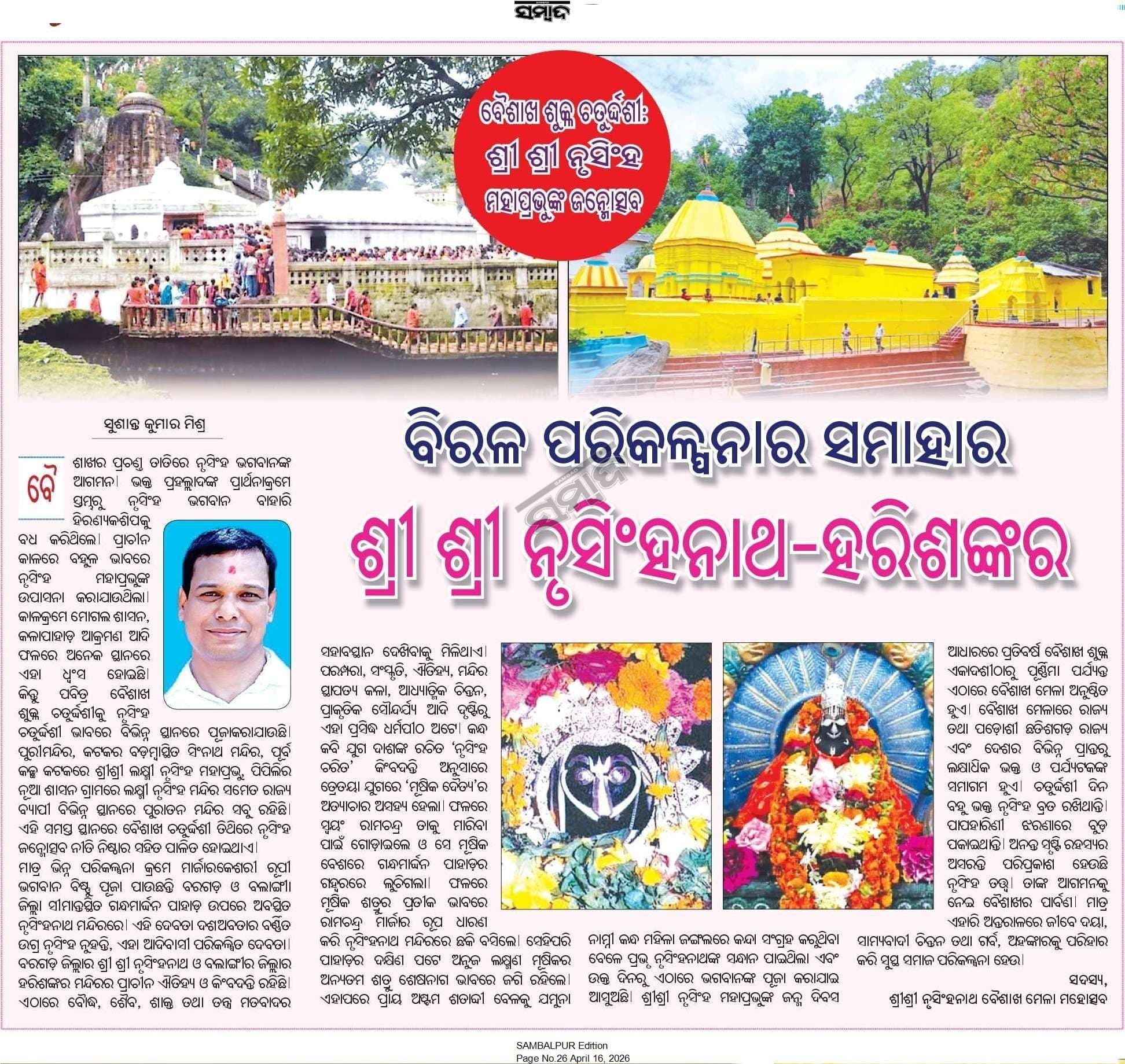

Under the blazing heat of the sun, Lord Vishnu incarnated as Nrusingha, emerging from a pillar at the call of Prahlad to destroy the tyrant Hiranyakashipu. This powerful moment symbolizes the triumph of faith over arrogance and evil.
In ancient times, Nrusingha worship was widespread across Odisha. However, invasions and historical disruptions, particularly during periods like the Kalapahada raids, led to the destruction of many temples. Despite this, devotion endured. The sacred day of Baisakh Shukla Chaturdashi is still observed as Nrusimha Chaturdashi across the region.
Numerous temples continue this tradition, including the revered Jagannath Temple, Singnath Temple, and several Lakshmi Nrusingha shrines across Odisha. On this day, Nrusingha Janmotsav is celebrated with deep devotion and spiritual fervor.
Yet, in the sacred hills of Gandhamardan, a unique form of worship emerges.
At the Nrusinghanath Temple, located on the border of Bargarh and Balangir, Lord Vishnu is worshipped in the rare form of Marjarakeshari. This form blends tribal belief systems with classical Hindu theology, reflecting a deeper cultural synthesis. The deity is associated with multiple incarnations and represents both fierce protection and local spiritual identity.
The nearby Harishankar Temple further strengthens this spiritual landscape. Together, these sites stand as living examples of coexistence between Buddhism, Shaivism, Shaktism, and Vaishnavism. Beyond religion, they represent a fusion of tradition, architecture, philosophy, and natural beauty.
According to Nrusingha Charita by Kandha poet Jug Dasha, during the Treta Yuga, a destructive “mouse demon” terrorized the region. Lord Rama pursued the demon to Gandhamardan, where it hid within dense forest wood. To defeat it, Rama assumed the form of Marja (cat), the natural enemy of the mouse, and remained there as Nrusimhanath. His brother Lakshmana guarded the southern side of the hill in another protective form.
Centuries later, around the 8th century, a Kandha woman discovered the deity while gathering forest produce, marking the beginning of regular worship at this sacred site.
Every year, the Baisakh Mela is held here from Ekadashi to Purnima. Lakhs of devotees from Odisha and neighboring states like Chhattisgarh gather to celebrate. On Chaturdashi, many observe fasting and take a holy dip in the Papaharini waterfall, seeking spiritual purification.
At its core, the philosophy of Nrusimha is not just about destruction of evil. It represents the balance between power and compassion, a reminder that true strength lies in eliminating arrogance and building a just, harmonious society.
Wherever divine purpose touches the earth, healing takes root in silence.
The botanical richness observed today reinforces the legend. Tribal communities have long relied on these slopes for medicine, preserving a lineage of knowledge that dates back centuries.